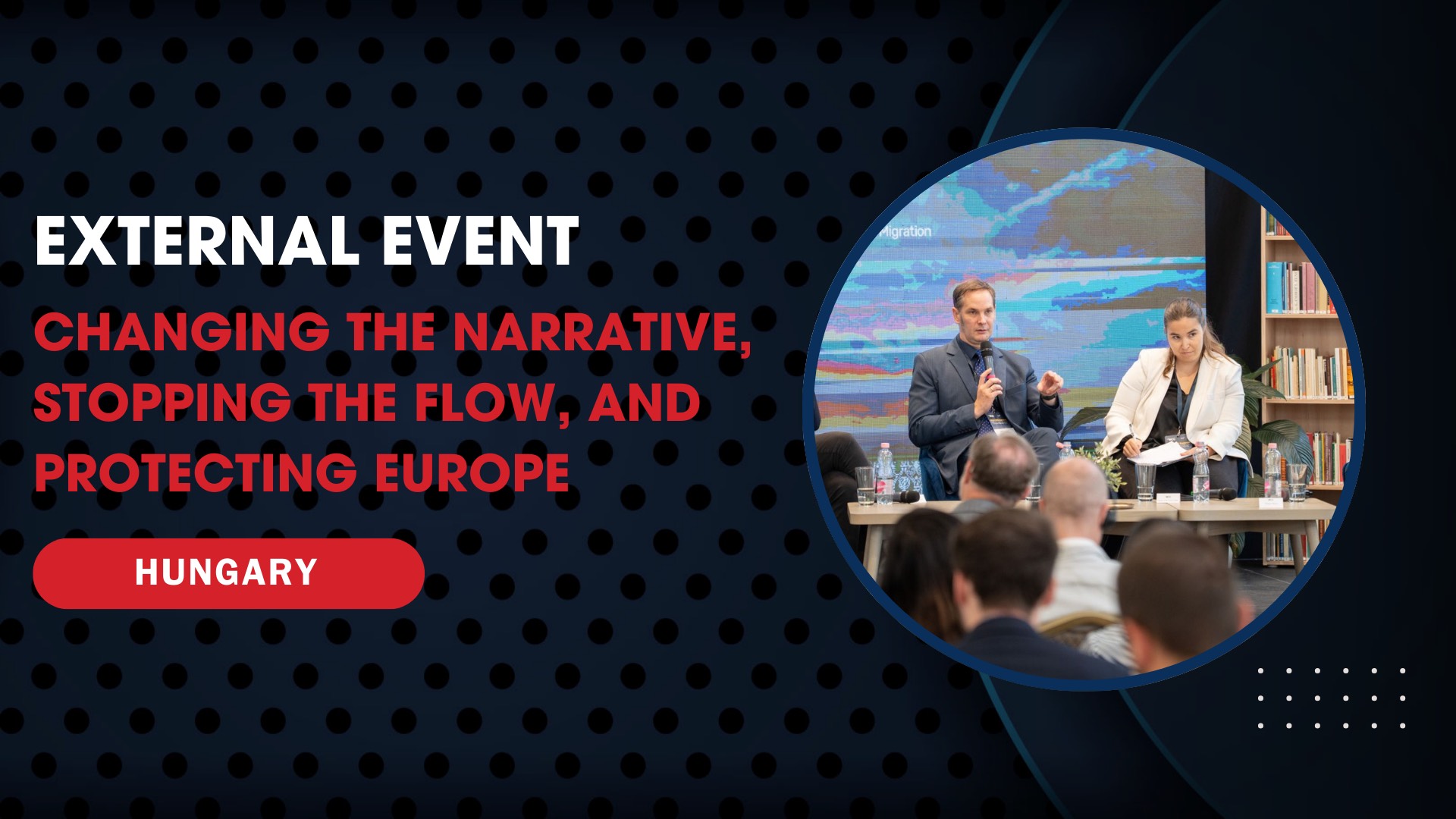
MCC-MRI Summit 2025: Governance of Human Mobility
European assessment, global perspectives, and regional dynamics.
Szeged (Hungary), 24-25 September – The MCC/MRI conference brought together policymakers, researchers, and representatives of European and American organizations, as well as African political leaders, to examine the governance of human mobility.
The program was structured around three key pillars:
- The European assessment following the 2015 migration crisis and the need for improved coordination among states;
- The U.S. perspective on shifting priorities and regulatory frameworks;
- Regional dynamics in the Sahel, the Horn of Africa, and the Middle East, with a focus on solutions combining security, development, and investment.
The shared objective was to identify practical and sustainable responses to reduce irregular migration, protect individuals, and strengthen stability.
First Day of Discussions – Comparison of European Approaches
The discussions held on the first day highlighted and compared the different European approaches. Topics such as operational cooperation, support for border states, the fight against trafficking networks, and guaranteed returns were addressed.
Second Day of Discussions – Regional Dynamics
The second day was dedicated to regional dynamics. State fragility, insecurity, corruption, and youth unemployment were linked to unmet expectations. Operational recommendations were then shared to address these challenges: vocational education and training programs connected to real jobs, support for start-ups and agricultural value chains, renewable energy projects generating local employment, and mechanisms involving diasporas to mobilize investment and mentorship.
Our executive director, Beatriz de León Cobo, spoke about the Sahel region as a case study, emphasizing that the only sustainable path is to offer effective options in the village or country of origin, as well as in regional hubs where people can train, start businesses, and work.
It was also recalled that many potential candidates for irregular migration face practical obstacles, as they do not have access to legal pathways due to administrative barriers and the lack of basic documents such as a passport. In this context, it is essential to adapt regular migration programs to the realities of individuals and to strengthen European preparedness through operational cooperation and information sharing.
Speakers
- Viktor MársaiMigration Research Institute (Host)
- Beatriz de LeónExecutive Director IEAM
- Balázs OrbánDirector Político PM Hungría
- Rocío de MeerCongreso de los Diputados (España)
Get in touch with us
Do you have any questions or comments? We are here to help and collaborate on migration and public policy projects.