Mediterranean Dialogue Forum 2024
A Three-Stage Debate on Informal Migration Across Madrid and Brussels.
The Mediterranean Dialogue Forum 2024 unfolded over two days between Madrid and Brussels, bringing together policymakers, researchers, and civil-society leaders to analyse the evolving landscape of informal migration in the Mediterranean. With sessions hosted at the European Parliament in both Spain and Belgium, the Forum fostered an uncommon space for exchange across political groups and across the two shores of the Mediterranean basin.
Madrid Session
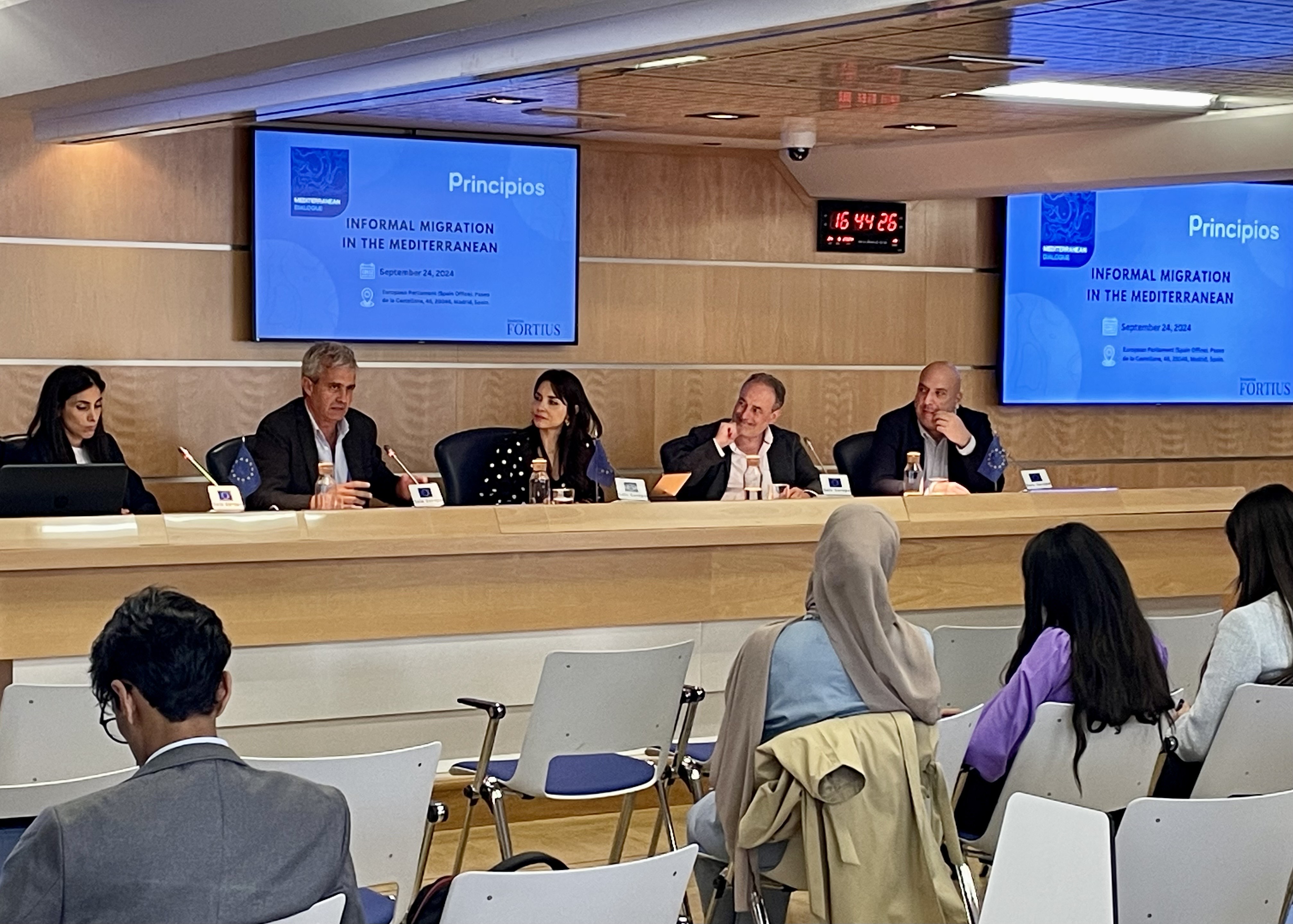
The Forum opened at the European Parliament’s Spain Office in Madrid with welcoming remarks that underlined the urgency of addressing informal migration as a long-term structural challenge, rather than a cyclical crisis.
A keynote by Dr Amparo González Ferrer, Senior Scientist at the Spanish National Research Council (CSIC), set the analytical tone, outlining demographic trends, labour demands, and the informal networks shaping mobility across the region.
Southern European Perspectives
The first panel explored the experiences of Spain, Italy, and Portugal in managing irregular entries, pressures on public services, and the fragmentation of EU governance. Speakers included Irune Ariño, Karina Kozhakhmet, and Gonçalo Torres, under the moderation of Mark Vargha, from the Budapest-based Migration Research Institute.
North African & Levantine Realities
The second panel turned to perspectives from origin and transit countries, featuring:
- Loubna El Hassouni (Morocco)
- Dr Mohamed Wounouki (Algeria)
- Malak Darwish (Lebanon)
Moderated by Tasnim Idriss, the conversation highlighted economic pressures, smuggling routes, governance challenges, and the limited policy tools available to Southern neighbours of the EU.
Cooperation, Development, and Migration Governance
A final Madrid session gathered practitioners from development and humanitarian sectors to assess the links between cooperation instruments and migration outcomes. The session closed with reflections on the need for long-term, shared frameworks between Europe and Africa.
Brussels Session
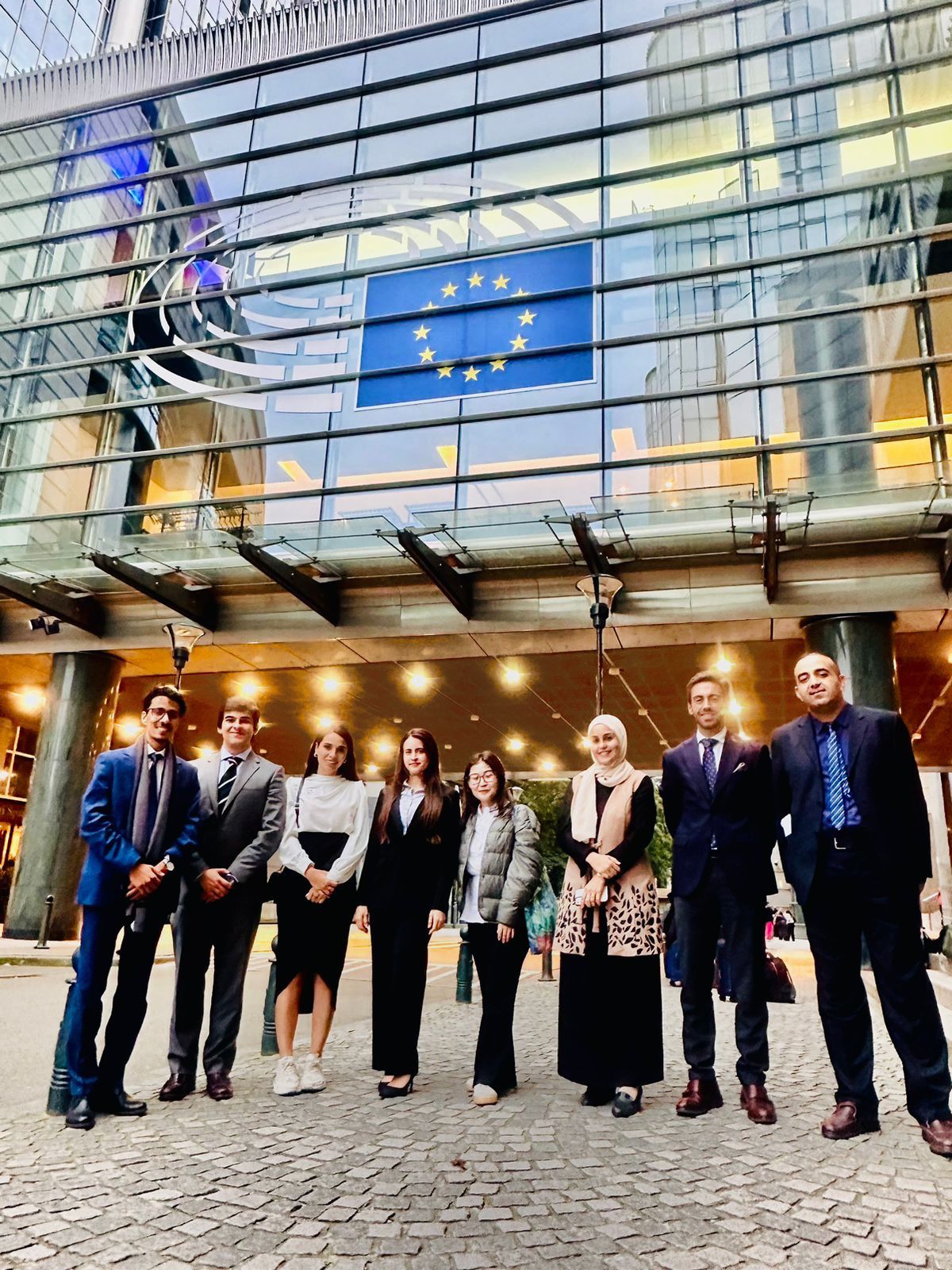
Morning Session – Hosted by MEP López Aguilar (S&D Group)
The Brussels programme began in the morning with opening remarks from MEP Juan Fernando López Aguilar, one of the Parliament’s most influential voices on justice and home affairs. He underscored the need for coordinated EU action, balanced between humanitarian obligations and border governance.
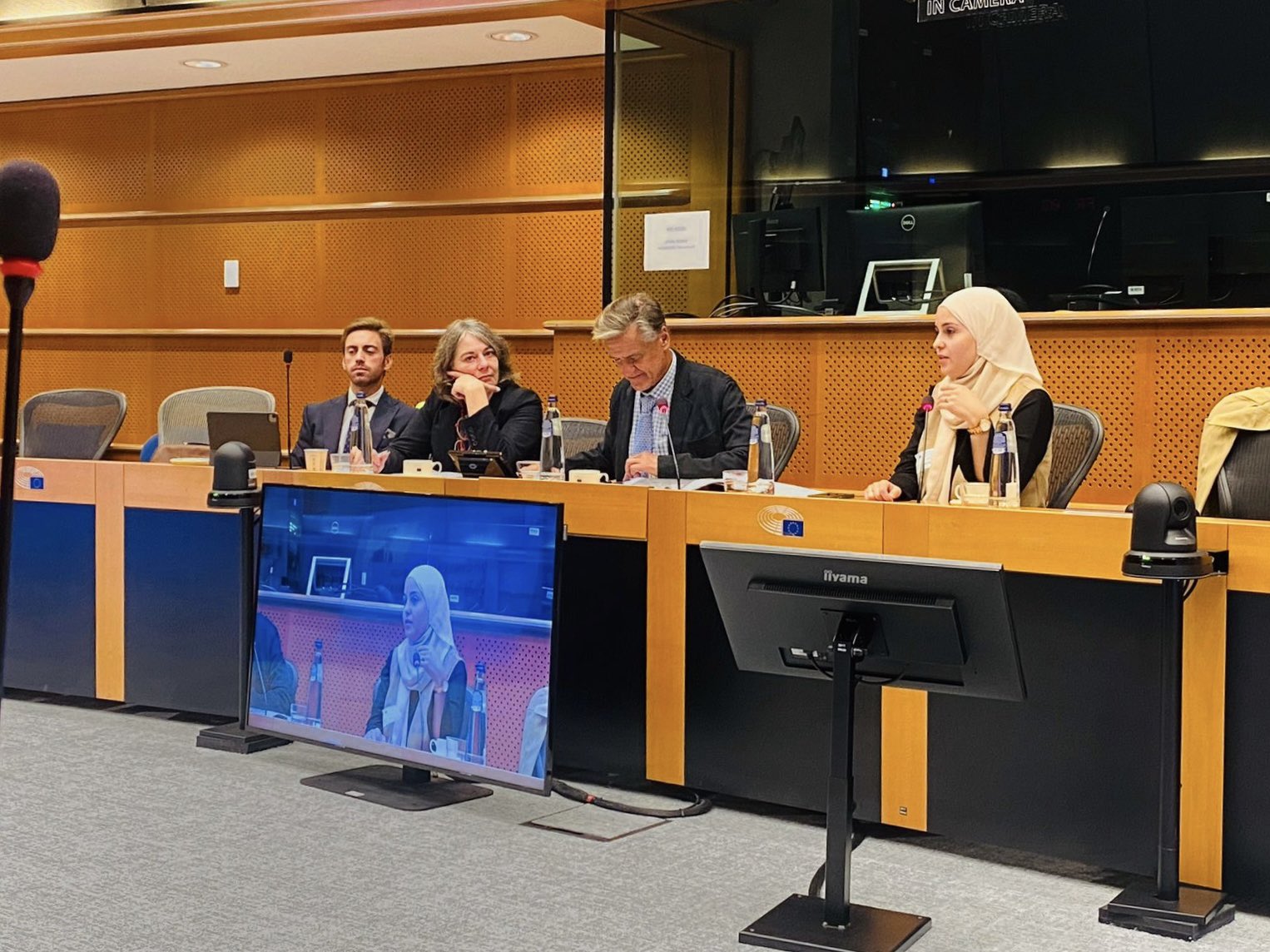
The panel featured the Forum’s main Mediterranean experts: Loubna El Hassouni (Morocco), Dr Mohamed Wounouki (Algeria), Malak Darwish (Lebanon), Gonçalo Torres (Portugal), and Karina Kozhakhmet (Italy). Their contributions offered a cross-Mediterranean view of informal migration, touching on demographic shifts, security dynamics, and the political pressures felt on both shores. MEP Cecilia Strada delivered closing remarks, warning that irregular migration cannot be treated solely as a security issue and urging deeper EU engagement in neighbouring regions.
Afternoon Session – Hosted by MEP Nicola Procaccini (ECR Group)
In the afternoon, attention shifted to a security-centred perspective under the patronage of MEP Nicola Procaccini, Co-Chairman of the ECR Group. Procaccini stressed the importance of restoring European border control capacity, combating human-smuggling networks, and developing sovereignty-driven policy tools.
The same Mediterranean Dialogue panelists—El Hassouni, Wounouki, Darwish, Torres, and Kozhakhmet—presented updated insights tailored to a more security-oriented parliamentary audience. Discussions centred on the geopolitics of transit routes, the rise of criminal intermediaries, and the vulnerabilities of both European and North African states.
Coalition-Building Dinner – Hosted by New Direction Foundation
The day concluded with a coalition-building dinner hosted by the New Direction Foundation, gathering parliamentarians, experts, and representatives from partner organisations. The dinner provided a confidential setting for strategic conversations on long-term cooperation between European and Mediterranean partners, exploring joint research initiatives, parliamentary coordination, and future editions of the Mediterranean Dialogue Forum.
A Cross-Party, Cross-Shore Conversation
The Mediterranean Dialogue Forum 2024 succeeded in bringing together two major political groups of the European Parliament—S&D and ECR—alongside experts from Morocco, Algeria, Lebanon, Portugal, and Italy. The active involvement of MEP López Aguilar, MEP Cecilia Strada, and MEP Nicola Procaccini gave the Forum significant institutional weight.
Despite ideological differences, a shared message emerged: the Mediterranean requires sustained cooperation, long-term thinking, and a more integrated understanding of the drivers behind informal migration.
Want to know more?
Discover more about our initiatives and join the conversation on the official Mediterranean Dialogue platform.
Go to Mediterranean DialogueSpeakers
Madrid Session
- Dr. Amparo González FerrerCSIC
- Irune Ariño
- Karina Kozhakhmet
- Gonçalo Torres
- Mark VarghaMigration Research Institute
- Loubna El Hassouni
- Dr. Mohamed Wounouki
- Malak Darwish
- Tasnim IdrissNorth Africa Coordinator
Brussels Session
- Juan Fernando López AguilarMEP (S&D)
- Cecilia StradaMEP (S&D)
- Nicola ProcacciniMEP (ECR)
- Loubna El Hassouni
- Dr. Mohamed Wounouki
- Malak Darwish
- Gonçalo Torres
- Karina Kozhakhmet
Get in touch with us
Do you have any questions or comments? We are here to help and collaborate on migration and public policy projects.