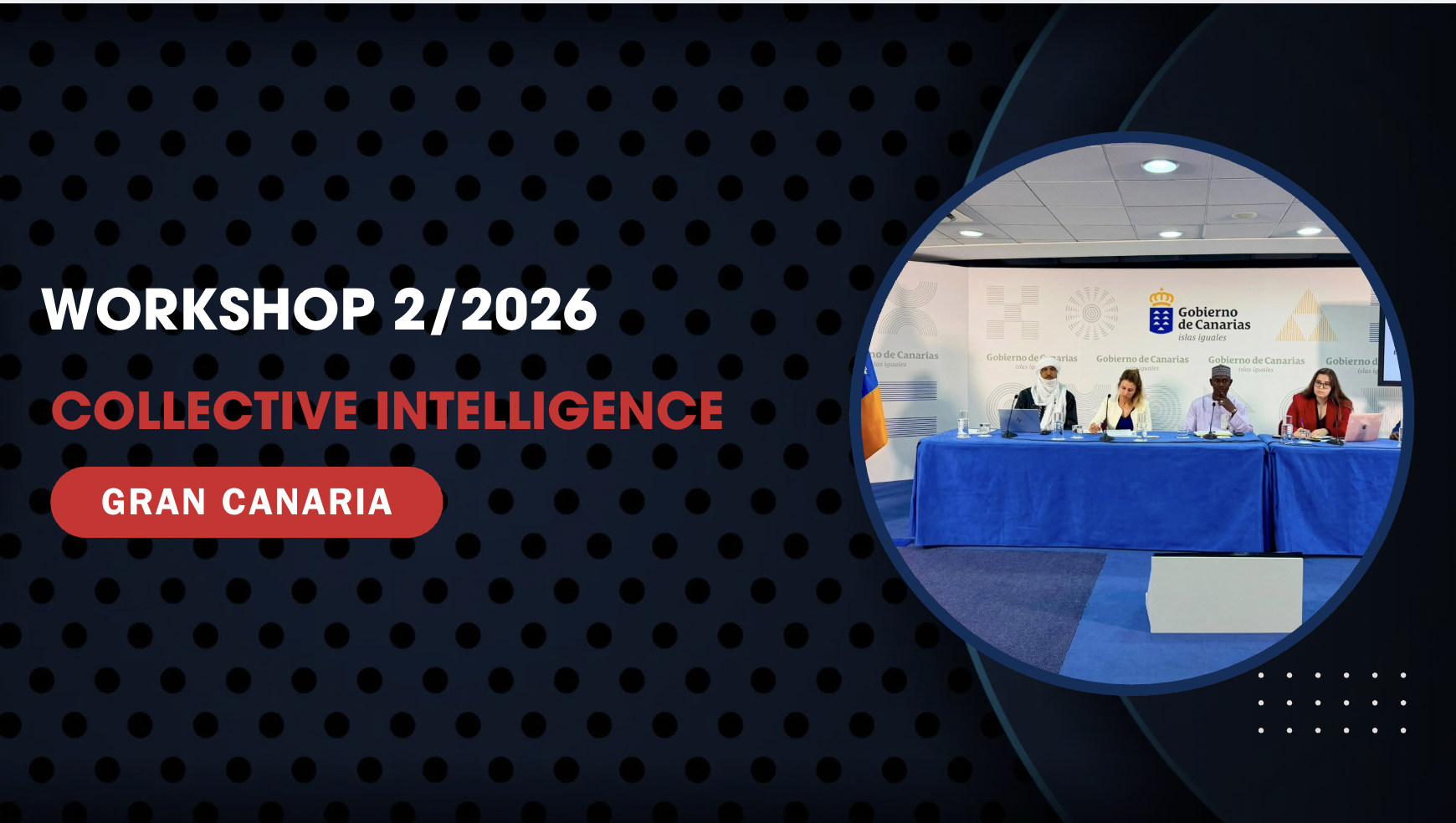
Collective Intelligence Workshop in Gran Canaria
Atlantic Route, Sahel and Canary Islands: anticipating migration dynamics, reducing vulnerabilities, and strengthening cooperation.
Workshop Overview
The Spanish Institute for Migration Analysis — IEAM — organised in Gran Canaria, in collaboration with the Government of the Canary Islands, a collective intelligence workshop dedicated to analysing the links between instability in the Sahel, political and socio-economic transformations in West Africa, and migration dynamics towards the Canary Islands.
The workshop brought together a diverse group of institutional, operational, humanitarian, academic, and civil society actors. The session was held under the Chatham House Rule, with the aim of fostering an open, frank, and constructive dialogue among participants.
The workshop was based on a shared premise: the Atlantic route to the Canary Islands cannot be understood as a purely maritime phenomenon or as a challenge affecting only the Canary Islands. It forms part of a much broader regional mobility system, shaped by conflict dynamics, insecurity, poverty, youth aspirations, family strategies, diasporas, control policies, intra-African mobility, insufficient legal pathways, and increasingly adaptive facilitation economies.
Participants
The workshop brought together representatives from the Government of the Canary Islands, the Spanish National Police, Guardia Civil, the Prosecutor's Office, international organisations, humanitarian actors, NGOs, civil society, academia, European representatives, specialised analysts, and experts with direct experience in the Sahel, West Africa, and the Atlantic route.
This diversity made it possible to bring together institutional, operational, humanitarian, academic, and field-based perspectives, generating a particularly rich debate on the factors shaping the evolution of the Atlantic route and on possible public policy responses.
Workshop Objectives
The workshop aimed to build a shared diagnosis of current mobility dynamics towards the Canary Islands and to formulate useful recommendations for the institutions involved.
More specifically, it sought to:
- Analyse how instability in the Sahel and West Africa influences migration routes towards the Canary Islands.
- Understand the effects of control, cooperation, and externalisation policies on the reorganisation of routes.
- Identify early-warning signals that could help move from a reactive logic to an anticipatory one.
- Discuss the professionalisation of certain facilitation networks and how to reduce their profitability without increasing risks for migrants.
- Examine the protection needs of women, minors, and people in situations of particular vulnerability.
- Explore alternatives linked to training, employment, circular mobility, legal pathways, and territorialised cooperation.
Themes Discussed
The workshop was structured around two main blocks: a first block focused on analysis and diagnosis, and a second block focused on recommendations and operational responses.
Key themes included:
The Atlantic route as a regional system
Participants underlined that the route to the Canary Islands cannot be analysed in isolation. It is connected to intra-African mobility dynamics, trans-Saharan routes, the Western and Central Mediterranean, countries of transit, and European control policies.
Containment, suspension, and invisibilisation of the route
Participants discussed whether the recent decrease in visible arrivals reflects a real reduction in migration pressure or rather a combination of stronger controls, interceptions, waiting periods in transit areas, and displacement towards other departure points.
The impact of Mali and the Sahel
The security situation in Mali and other parts of the Sahel was analysed as a key factor for understanding internal displacement, family decisions to migrate, youth pressures, and the evolution of routes towards West Africa and the Canary Islands.
Facilitation networks, illicit economies, and professionalisation
One of the central discussions focused on the adaptation of facilitation networks. Indicators discussed included shorter waiting times, the use of closed messaging groups, staged payments, mobile money, logistical fragmentation, the shortage of experienced captains, and the displacement of departure points towards less controlled areas.
Protection, women, and minors
Several contributions highlighted growing concern over the feminisation of some arrivals, risks of trafficking, exploitation and forced marriage, as well as the situation of migrant children and adolescents, both accompanied and unaccompanied.
Return, reintegration, and families
The workshop addressed the need to rethink return not as an administrative operation, but as a family, community, economic, and psychosocial process. Participants stressed that reintegration must take into account family pressure, debts, community expectations, and the need to generate real livelihoods.
Legal pathways, circular mobility, and territorial development
Participants underlined the importance of making legal pathways credible and accessible, improving visa procedures, expanding regular and circular mobility programmes, and connecting vocational training with real economic needs in countries and territories of origin and transit.
Anticipation and unintended effects
One of the most repeated ideas was the need to anticipate the unintended effects of migration policies. Closing one route can displace flows, increase the cost of the journey, reinforce dependence on intermediaries, and transfer risks to less visible and more dangerous segments.
Outputs and Next Steps
The workshop helped consolidate a set of strategic messages and preliminary recommendations for moving towards a more coherent governance of the Atlantic route.
Key lines of work identified include:
- Moving from a reactive logic to an anticipatory one.
- Strengthening analytical capacity on routes, prices, profiles, networks, departure points, and early-warning signals.
- Reducing the profitability of facilitation networks, with a particular focus on financial investigations and judicial cooperation.
- Reinforcing the protection of women, minors, and vulnerable people along migration corridors.
- Ensuring that legal pathways, circular mobility, and vocational training become real alternatives rather than symbolic mechanisms.
- Territorialising cooperation by connecting projects with local needs, the private sector, communities, and diasporas.
- Evaluating the unintended effects of migration agreements and control policies.
Building on the workshop discussions, IEAM will prepare a Policy Paper bringing together the main findings and recommendations. The document will be shared with participants and interested institutions in the coming weeks.
The Gran Canaria workshop forms part of IEAM's broader line of work dedicated to building spaces for strategic dialogue between Europe, Africa, and the Mediterranean, with the aim of translating field knowledge and collective intelligence into useful, realistic, and rights-based public policy proposals.
Press Coverage
- Gobierno de Canarias — Canarias pide tener voz en el Pacto Europeo de Migración y Asilo "por responsabilidad, no como un privilegio"
- Europa Press — Canarias exige una "voz real" en la aplicación del Pacto Europeo de Migración y Asilo
- Teleprensa — Canarias exige una "voz real" en la aplicación del Pacto Europeo de Migración y Asilo
- Diario Siglo XXI — Canarias exige una "voz real" en la aplicación del Pacto Europeo de Migración y Asilo
- Canarias7 — Canarias pide tener voz en el pacto de migración por responsabilidad
- Maspalomas Ahora — Canarias reclama voz propia en la aplicación del pacto migratorio europeo
- Canarias en Pleno — Canarias no recibe información y exige una voz real en el Pacto de migración
- La Gaceta de Canarias — El Gobierno canario reclama participar en la aplicación del nuevo Pacto Europeo de Migración
Workshop Photos
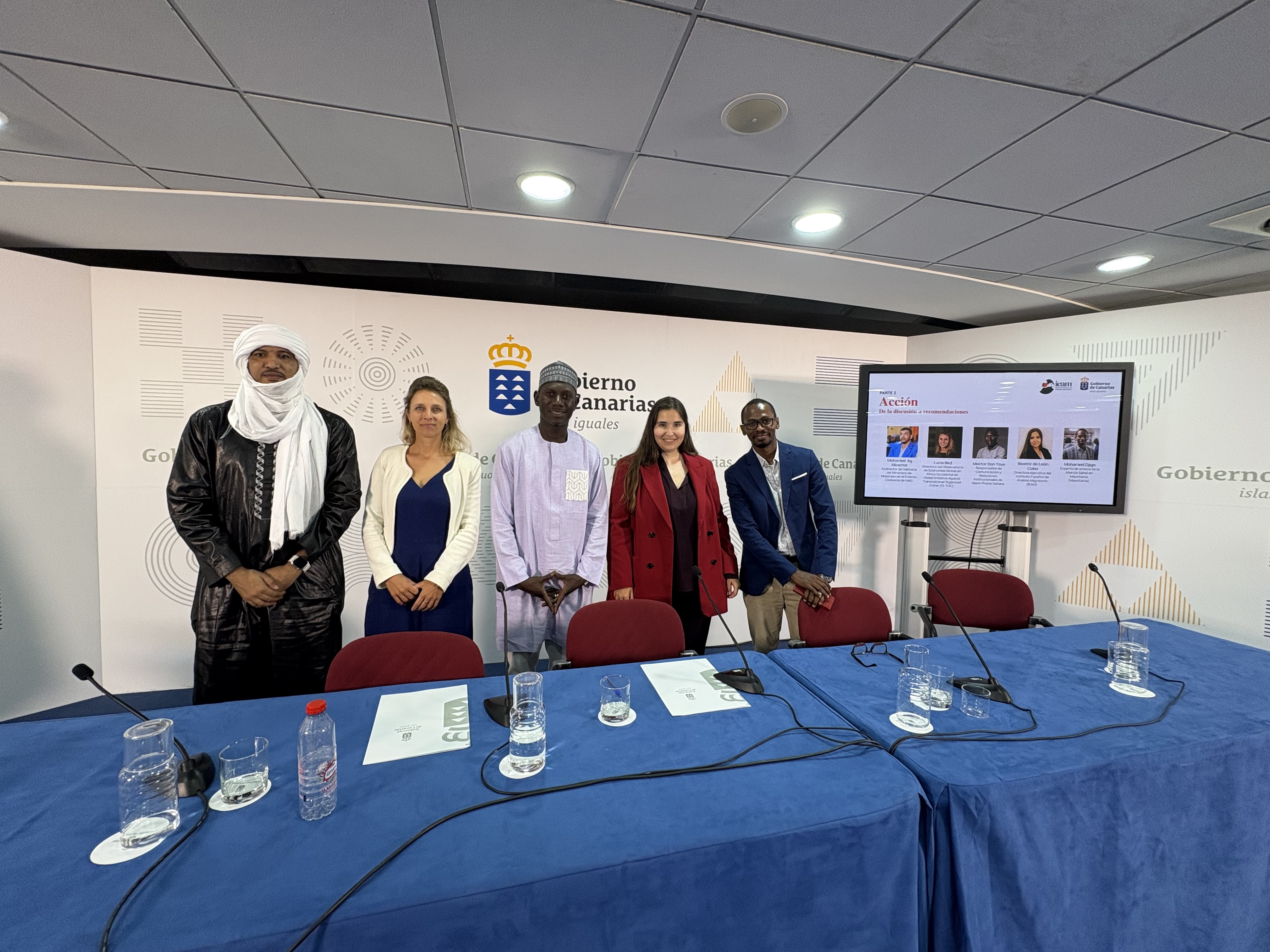
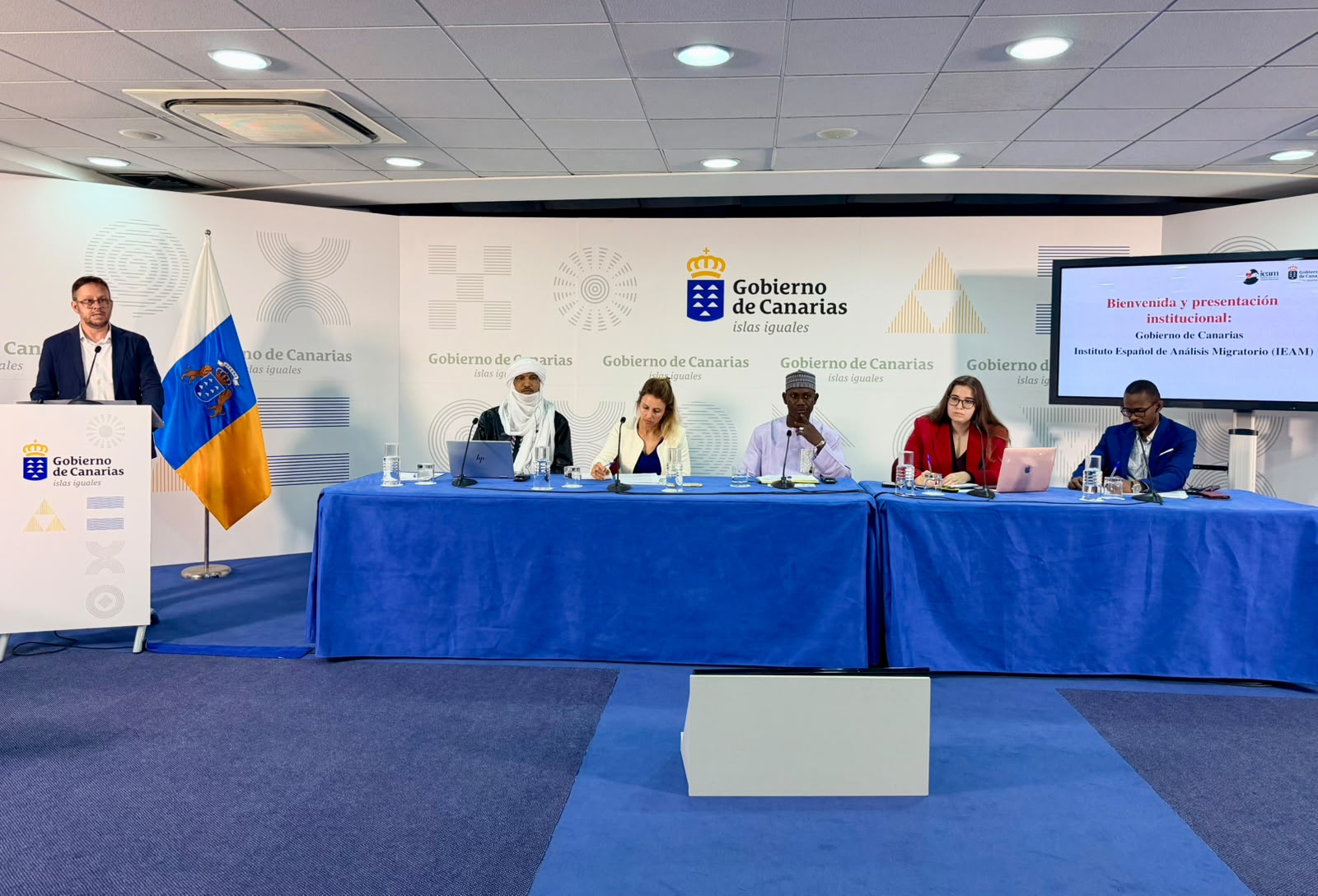
Speakers
- Beatriz de León CoboExecutive Director of the Spanish Institute for Migration Analysis
- Moctar Dan YayeHead of Alarme Phone Sahara (Niger/Mauritania)
- Mohamed Ag AlbacharChief of Staff at the Ministry of Communication, Digital Economy, and Administrative Modernization of Mali; former Chief of Staff at the Ministry of Malians Abroad (Mali)
- Mohamed DjigoLiaison Expert for the Sahel Alliance in Mauritania (Mauritania)
- Lucía BirdDirector of the West Africa Observatory of the Global Initiative Against Transnational Organized Crime (Senegal)
Get in touch with us
Do you have any questions or comments? We are here to help and collaborate on migration and public policy projects.