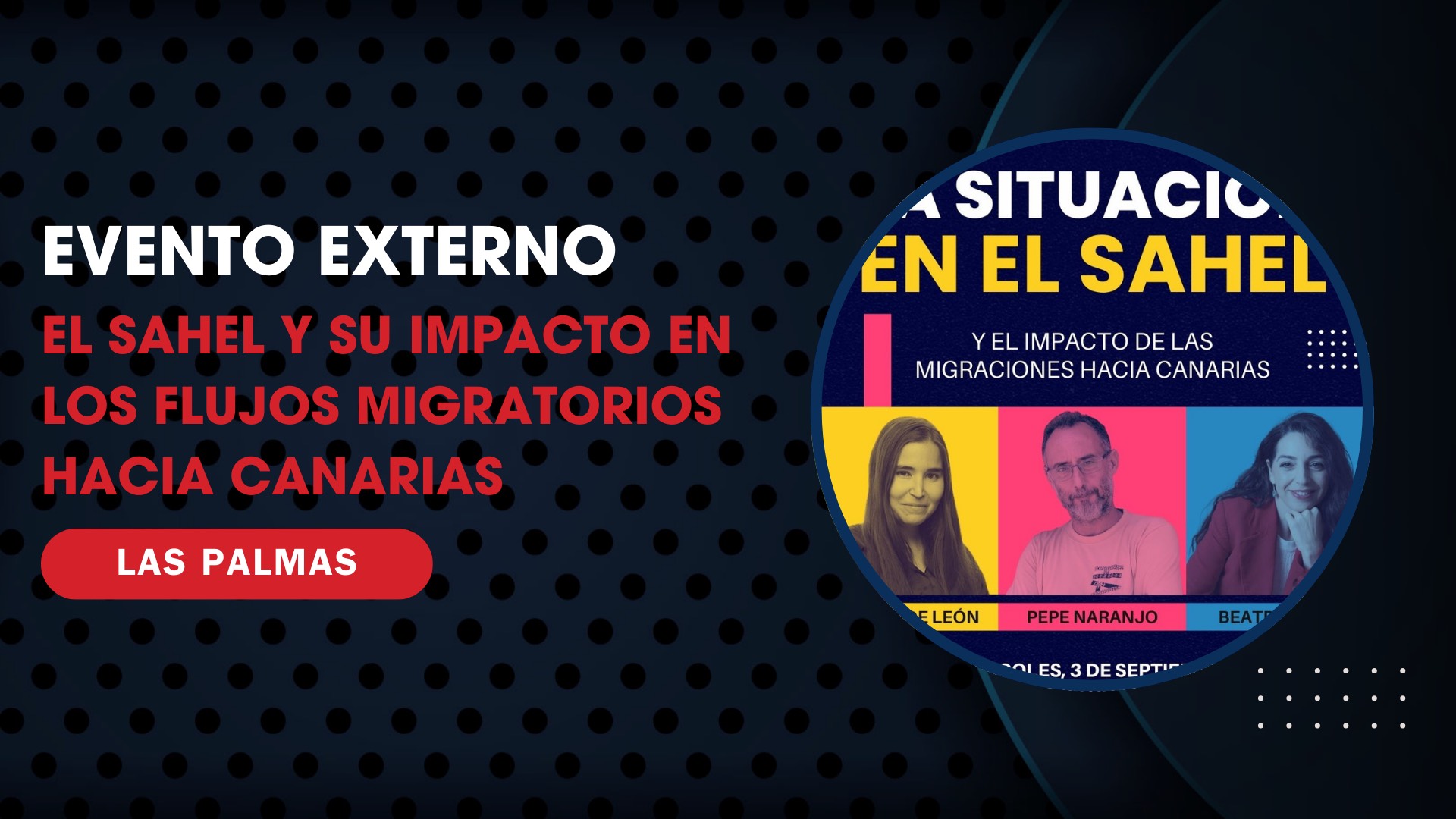
Jornada de análisis: El Sahel y su impacto en los flujos migratorios hacia Canarias
Análisis de las rutas atlánticas y la seguridad regional.
La iniciativa Innovación para la gestión migratoria (IRLab) organizó una sesión para analizar los movimientos geopolíticos en el Sahel y sus repercusiones para las Islas Canarias.
El Gobierno de Canarias celebró, el miércoles 3 de septiembre, un webinar de análisis sobre la situación geopolítica en el Sahel y su impacto en los flujos migratorios hacia el archipiélago, abierto a todas las personas interesadas.
La sesión contó con la intervención de la doctora Beatriz Mesa, experta en Ciencias Políticas; Beatriz de León Cobo, directora del Instituto Español de Análisis Migratorio (IEAM); y el periodista José Naranjo, quienes abordaron distintos aspectos de la coyuntura actual, desde el deterioro político y de seguridad en la región hasta el impacto en la salida de embarcaciones hacia Canarias. La sesión virtual fue presentada por Octavio Caraballo, viceconsejero del Gabinete del Presidente, y Claudia Pérez, coordinadora de Innovación para la Gestión Migratoria.
El presidente de Canarias, Fernando Clavijo, había expresado en varias ocasiones su preocupación por la falta de respuesta de la Unión Europea (UE) ante la situación, que también afecta a los flujos migratorios, y reclamó políticas de cooperación para que los países de la región puedan alcanzar un desarrollo y una convivencia pacífica.
La expansión de la violencia yihadista, los déficits estructurales en desarrollo económico y gobernanza, y las repercusiones del cambio climático generan una situación de inestabilidad cada vez más creciente, que puede afectar no solo a los países de esta zona del continente africano, sino también al entorno circundante.
Rutas y riesgos
De hecho, la reducción en la llegada de migrantes a las costas canarias en los últimos meses no significa que la migración haya cesado; más bien, los puntos de partida se están desplazando hacia el sur, hacia zonas menos vigiladas, lo que conlleva un mayor riesgo para los viajeros.
El cierre de fronteras en Mauritania y Senegal ha obligado a las redes de tráfico a desplazarse hacia el sur y buscar puntos de salida en Guinea-Bisáu y Guinea-Conakry. De esta manera, esquivan los controles reforzados en África Occidental. La distancia entre Conakry y El Hierro supera los 2.200 kilómetros, unos 750 kilómetros más que desde Senegal o Gambia.
A esto se suma la alta natalidad en los países de esta región. El 60 % de la población del Sahel tiene menos de 25 años y, según las proyecciones estadísticas, para 2050 habrán 500 millones de personas habitando estos países. Esta circunstancia requiere generar oportunidades para la población en sus respectivos países como alternativa a la emigración.
Conclusiones
La migración no ha cesado: las rutas se adaptan a los controles. Se requiere cooperación entre la UE y África, oportunidades en los países de origen y un seguimiento constante de las dinámicas regionales.
Ponentes
- Beatriz MesaDoctora en Ciencias Políticas
- Beatriz de León CoboDirectora Ejecutiva IEAM
- José NaranjoPeriodista
Ponte en contacto con nosotros
¿Tienes alguna pregunta o comentario? Estamos aquí para ayudarte y colaborar en proyectos relacionados con migraciones y políticas públicas.