75 countries excluded from permanent legal immigration to the United States
The announcement by the Trump administration of a planned pause on the issuance of permanent visas could significantly reshape patterns of permanent legal immigration.
The announcement by the Trump administration of a planned pause on the issuance of permanent visas for would-be immigrants from 75 countries could significantly reshape patterns of permanent legal immigration to the United States. By temporarily suspending immigrant visa processing for a large group of countries, the measure has the potential to affect a substantial share of applicants seeking lawful permanent residence. This analysis by the Spanish Institute for Migration Analysis (IEAM) examines the scope of these potential impacts based on immigrant visa data published by the U.S. State Department for fiscal year 2024.
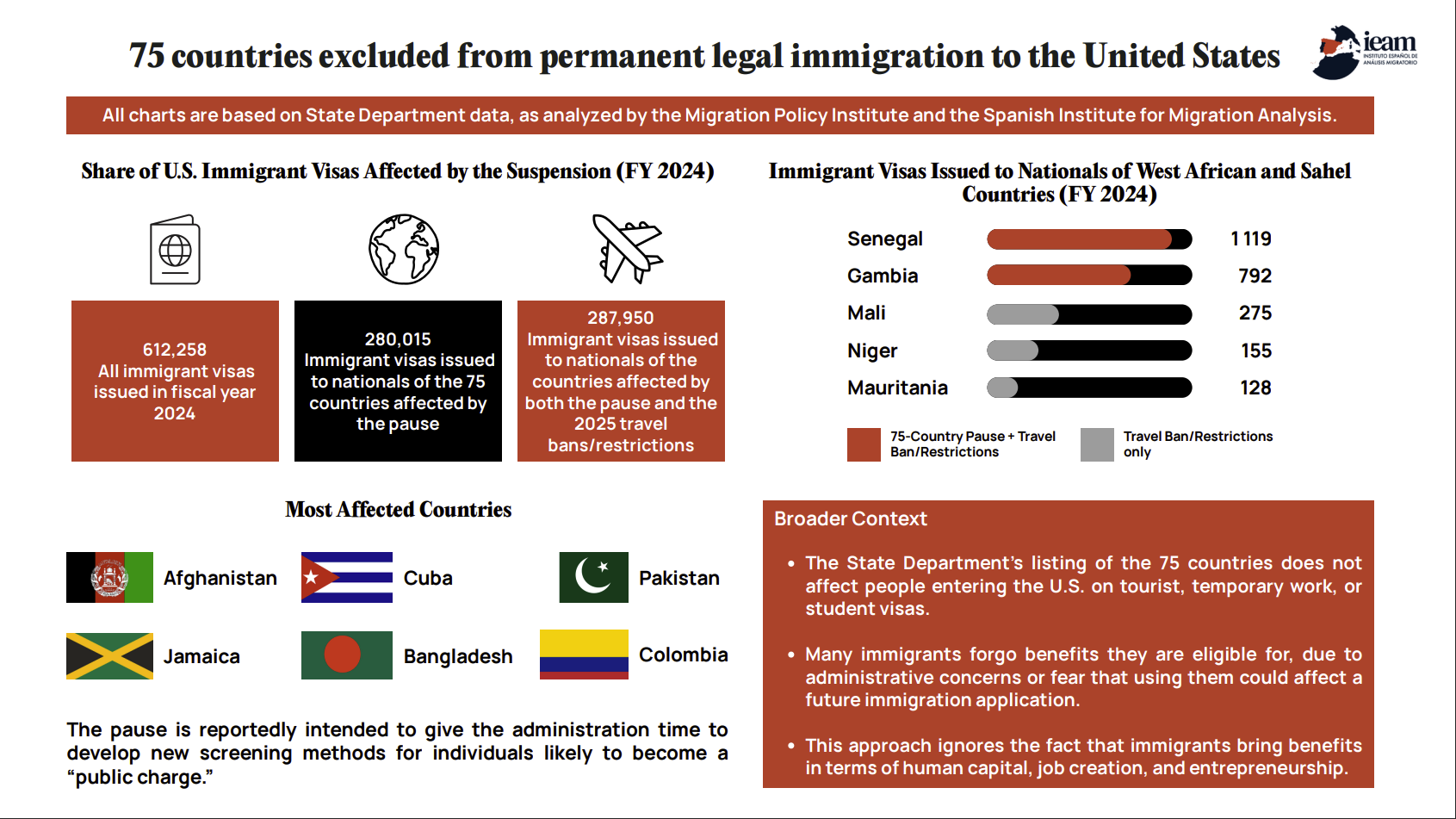
Share of U.S. Immigrant Visas Affected by the Suspension (FY 2024)
In fiscal year 2024, the United States issued a total of 612,258 immigrant visas (permanent visas that allow foreign nationals to enter the country and obtain a green card). Of these, 280,015 visas – nearly 46% of all permanent visas issued that year – were granted to nationals of the 75 countries now subject to the administrative pause. Additionally, 287,950 visas were issued to nationals of countries impacted by both the pause and the 2025 travel bans or restrictions. These figures highlight the share of immigrant visas affected by the suspension and related restrictions, demonstrating the significant effect on applicants.
Most Affected Countries
The countries most affected by the administrative pause are Afghanistan, Cuba, Pakistan, Jamaica, Bangladesh, and Colombia. The pause is reportedly intended to give the administration time to develop new screening methods for individuals likely to become a “public charge.” However, in fiscal year 2024, only 1,008 individuals of all nationalities – not only those from the 75 affected countries – were denied an immigrant visa on these grounds, suggesting that the measure represents a sweeping policy response to a limited problem.
Immigrant Visas Issued to Nationals of West African and Sahel Countries (FY 2024)
In fiscal year 2024, immigrant visas were issued to nationals of several West African and Sahel countries. Senegal received 1,119 visas and Gambia 792, both affected by the 75-country pause as well as travel bans or restrictions. In contrast, Mali received 275 visas, Niger 155, and Mauritania 128, all subject only to travel bans or restrictions. These figures illustrate the uneven impact of the administrative pause and related restrictions across the region.
Broader Context
The State Department’s listing of the 75 countries does not affect individuals entering the United States on tourist, temporary work, or student visas. It also does not apply to individuals already in the country who have applied for, or will apply for, a green card. Many immigrants forgo benefits for which they are eligible due to administrative concerns or fear that using them could affect a future immigration application. Moreover, research consistently shows that immigrants use public benefits at lower rates than native-born Americans, in part because many noncitizens are ineligible for federal assistance. This approach overlooks the broader contributions immigrants make in terms of human capital, job creation, and entrepreneurship.
IEAM Team
Research
Keep exploring
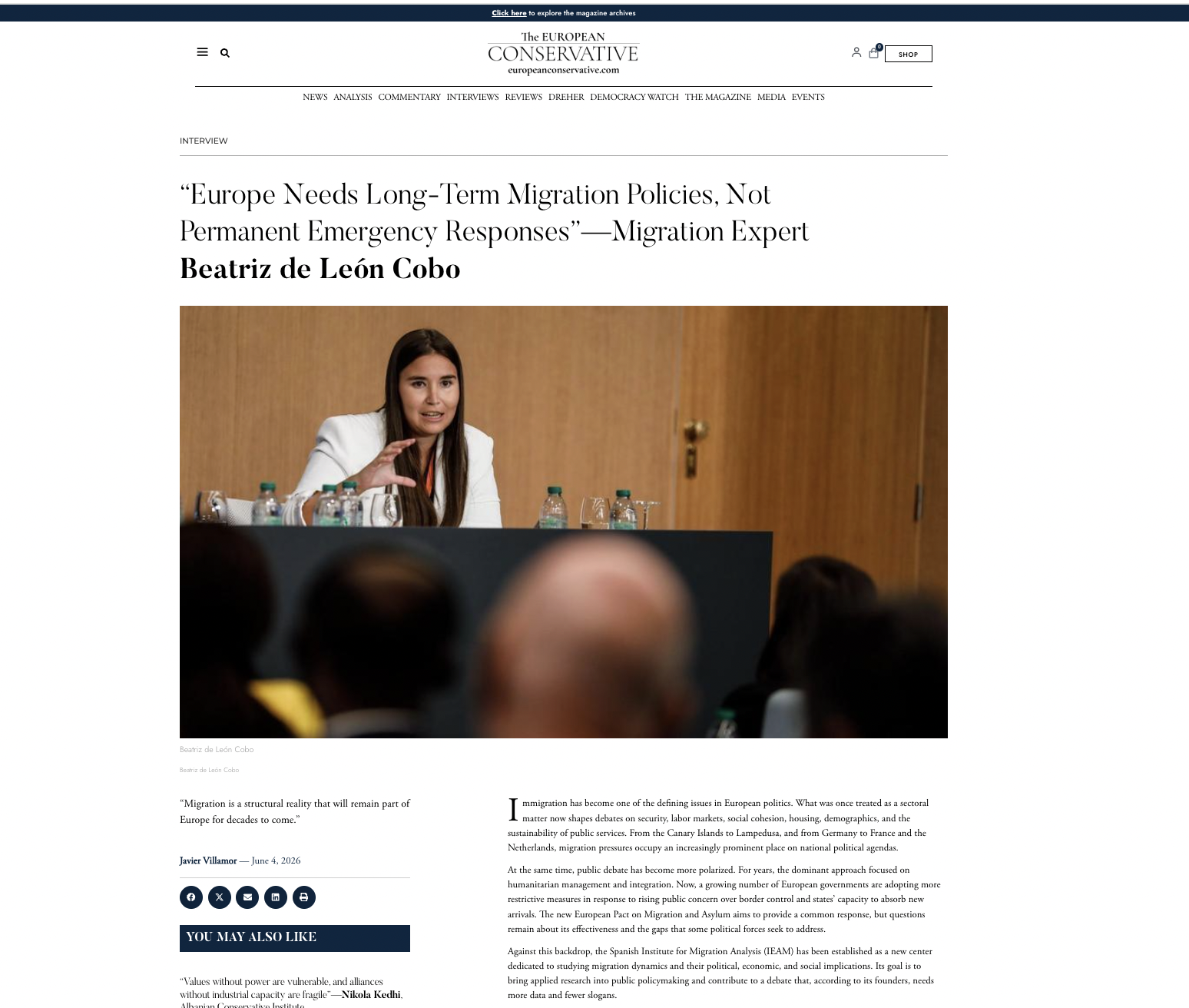
The European Conservative interviews Beatriz de León Cobo on migration, the Sahel, and European policy responses
IEAM's director discusses current migration challenges, the polarisation of public debate, and the need for more technical, precise, and long-term migration policies.
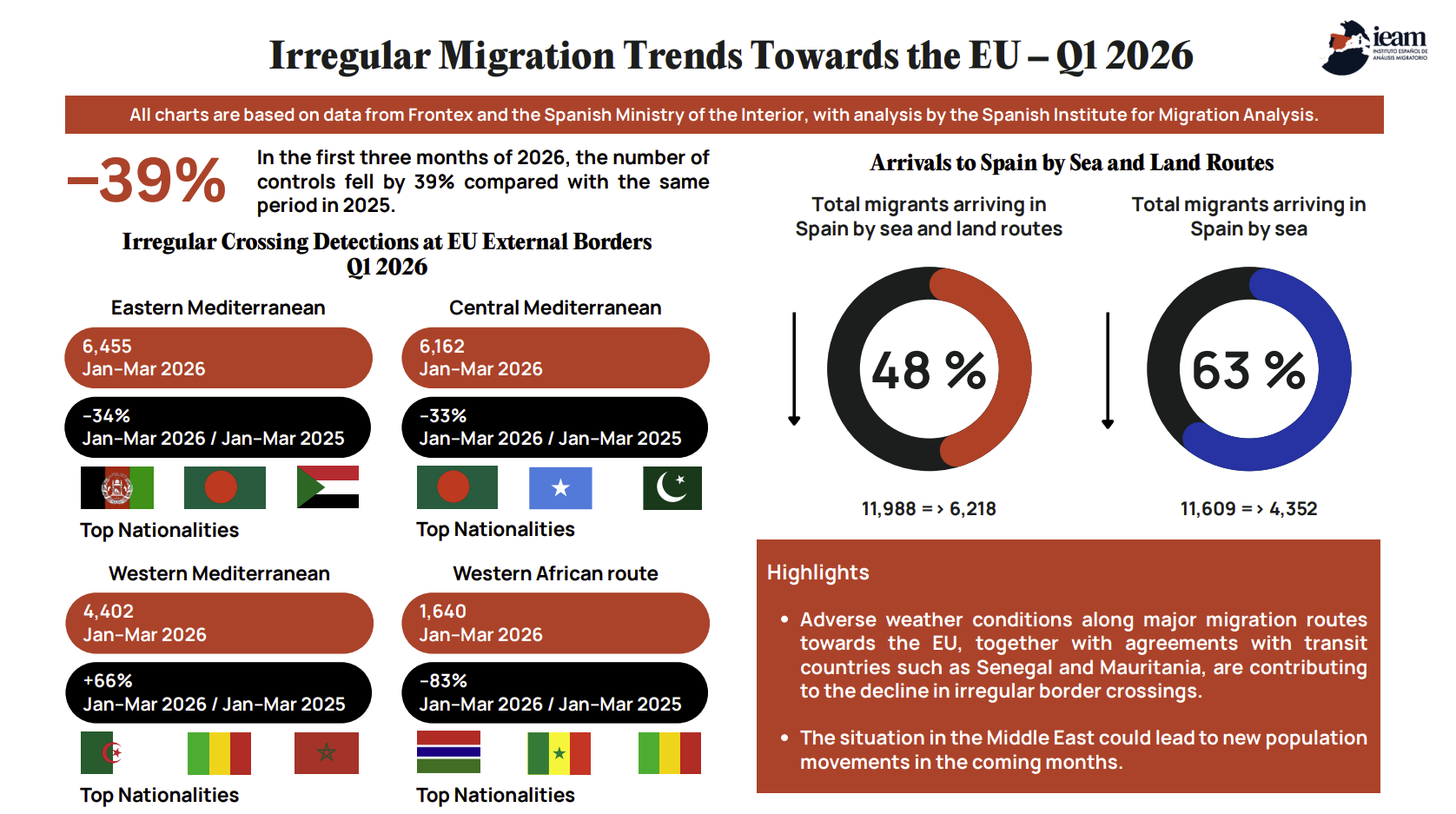
Irregular Migration Trends Towards the EU – Q1 2026
Analysis of the main trends in irregular migration towards the EU in the first quarter of 2026, based on data from Frontex and the Spanish Ministry of the Interior.
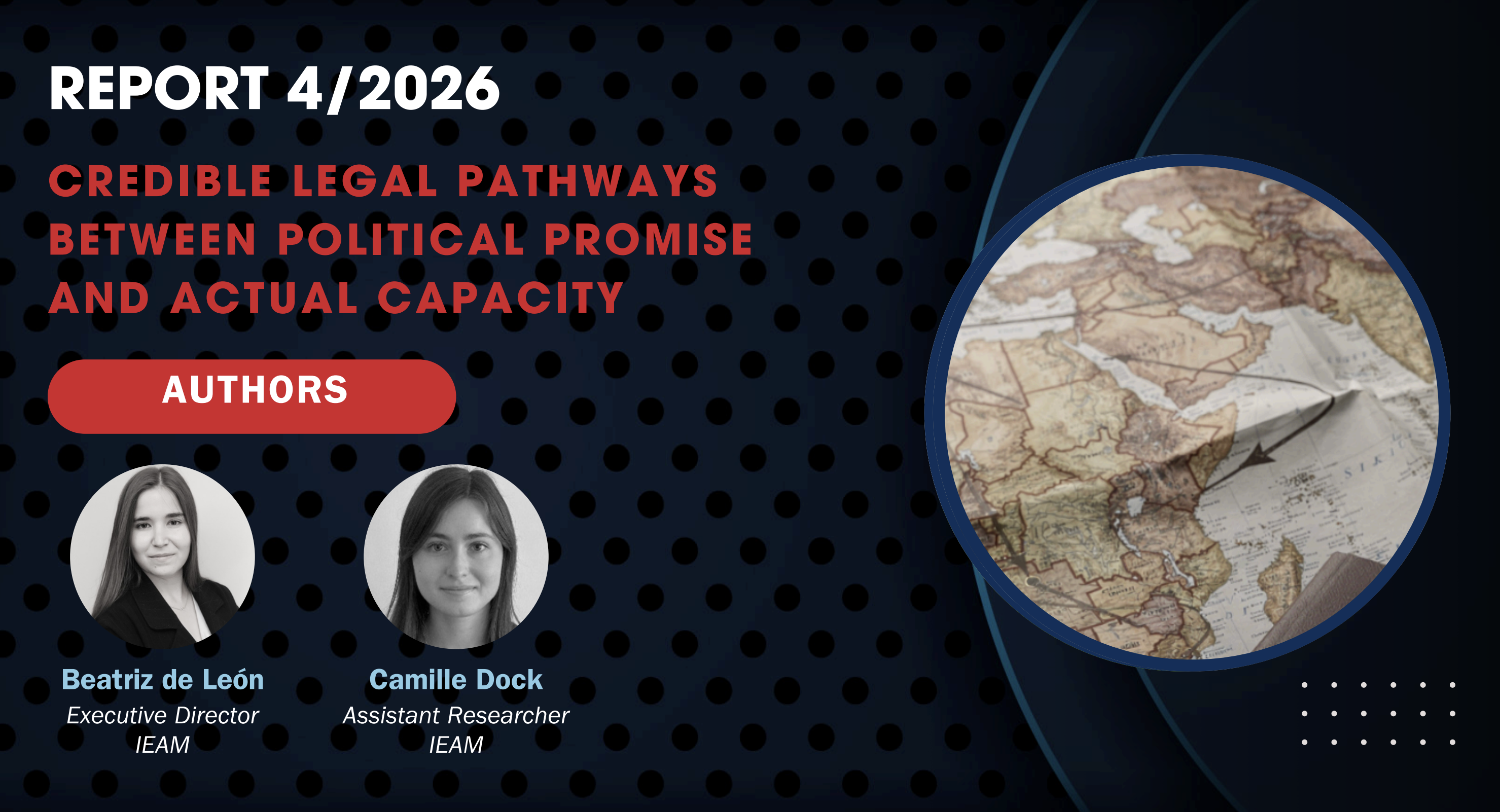
Credible legal pathways: Between political promise and actual capacity
Strategic guidelines to turn legal pathways into effective and sustainable mechanisms.
Get in touch with us
Do you have any questions or comments? We are here to help and collaborate on migration and public policy projects.