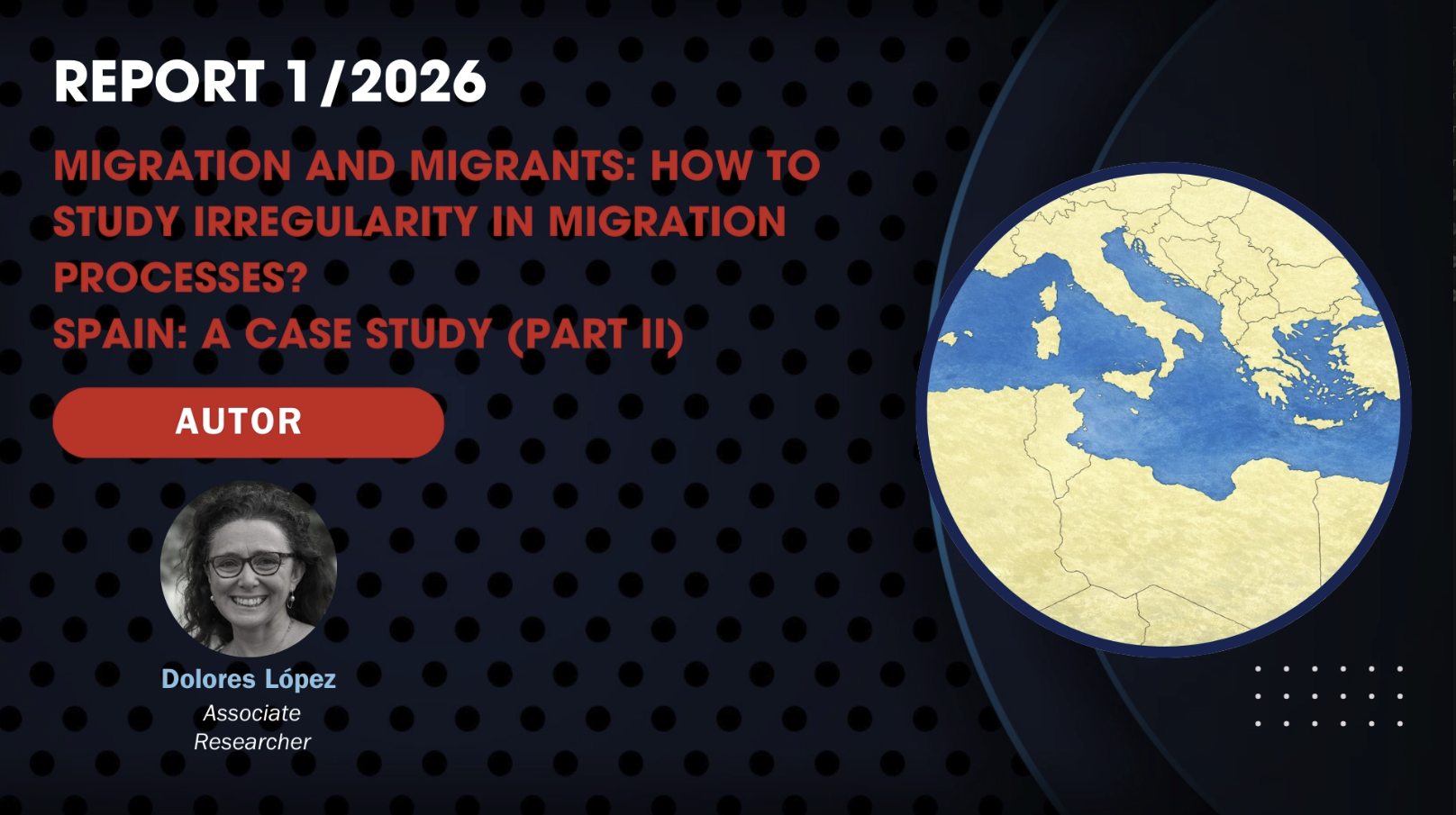
Migration and Migrants: How to Study Irregularity in Migration Processes? Spain: A Case Study (Part II)
Analysis of regularization processes, characteristics of irregular migrants, and administrative and humanitarian challenges in Spain.
Irregular migration to Europe and Spain has undergone profound transformations over the past decade, with changes in flow intensity, route reconfiguration, and sustained pressure on specific border areas. At the same time, institutional responses have increasingly relied on border control and cooperation with countries of origin and transit, while humanitarian challenges and limitations in accurately measuring the phenomenon persist, particularly regarding deaths and disappearances.
This report is divided into two parts. The first part, published in December 2025, analyzed the evolution of irregular migration to Spain within the European context, examining trends and flows, routes used, and challenges related to reception and international protection systems, with particular attention to the centrality of the Atlantic route and pressure on the Canary Islands. The second part examines regularization processes, the characteristics of migrants in irregular status, and the administrative and humanitarian challenges associated with their integration. It reviews the evolution of Spanish policies since the 1980s, with a focus on arraigo (roots procedure). The report also considers the historical context of Spain as a country of emigration for decades, developing its regulatory framework and statistical system “in parallel” with increasing immigration, leaving gaps that still affect the monitoring of some administrative procedures. Special attention is given to unaccompanied foreign minors (UAMs) and the territorial dynamics of their distribution. Finally, repatriation procedures are examined, highlighting tensions between legal frameworks, migration realities, and institutional capacities.
Spain became a receiving country before having a fully developed migration policy, which led to successive extraordinary regularization processes granting residence permits to people already living in the country. Since 1985, multiple regularizations have taken place (eight extraordinary processes prior to the one approved on 27 January 2026). These processes created a migration regime combining ordinary channels with subsequent regularization mechanisms, especially through arraigo.
Main Findings
1. Arraigo as a tool for regularization
Since 2025, Spain has institutionalized regularization processes for irregular migrants based on arraigo, progressively replacing extraordinary regularizations.
Data shows a strong increase in residence permits granted for family arraigo (65% of cases), predominantly to Peruvian and Cuban nationals. Educational arraigo accounts for around 20%, social arraigo approximately 13%, while labor arraigo is residual (~1%). Age groups 25–34 and 35–44 predominate; family arraigo has a higher female presence, whereas labor and educational arraigo are mostly male.
The approach also simplifies criteria for submitting a regularization application, reducing the required residence period in Spain to two years.
2. Evolution of the demographic profile of migrants
Data on residence permits granted through arraigo shows that beneficiaries’ nationalities reflect recent irregular flows or situations of irregularity linked to the expiration of previous authorizations.
- Colombia, Morocco, and Peru are among the main nationalities affected, with Colombians currently in first place and a significant recent increase in their numbers.
- Among the top 20 nationalities, most come from Latin America, supplemented by some African countries (Morocco, Senegal, Algeria), one Asian country (Pakistan), and one European country (Russia).
This diversity reflects a transformation of the migrant profile, with a notable increase in Latin American citizens among those regularized through arraigo, compared to the previous decade when the national composition was very different.
3. Unaccompanied minors (UAMs): a humanitarian and logistical challenge
The number of unaccompanied foreign minors (UAMs) has increased considerably in recent years. The vast majority are boys, particularly among African nationals (95% of Moroccans, 97% of Algerians and Senegalese, 98% of Gambians), while among minors from the Americas, girls are more numerous.
The territorial distribution of UAMs remains unequal despite solidarity mechanisms between autonomous regions. Some regions, such as the Canary Islands, are heavily impacted with over 5,800 UAMs, followed by Catalonia (2,242), Andalusia (1,376), the Basque Country (900), and the autonomous city of Ceuta (450), while other regions have surplus capacity. Harmonizing UAM presence data is essential to organize equitable distribution.
UAMs reside in reception centers and may live with Spanish minors placed in foster families. Recent studies show that overcrowding limits reception capacity and highlights tensions between humanitarian needs, logistical resources, and child protection systems.
4. Expulsions remain rare and selective
Despite a strict legal framework (document irregularity is considered a serious offense), effective expulsion orders remain marginal: in 2024, they accounted for only 2.8% of all issued expulsion orders. This gap is also explained by jurisprudence: Supreme Court Ruling No. 366/2021 (following CJEU doctrine) reduces the automatic link between irregular stay and expulsion, reinforcing proportionality and requiring aggravating circumstances for expulsion over fines.
Obstacles include difficulty notifying or locating the affected person, judicial proceedings interrupting enforcement (appeals, international protection or asylum requests), refusal or limitations from countries of origin to accept their citizens, and insufficient state resources to process a high number of cases. Two operational factors are relevant: (i) the institutional difference between those issuing orders (government delegates/subdelegates) and those executing them (security forces), and (ii) the possibility that an arraigo request (if requirements are met and no serious crimes are involved) may revoke an expulsion order. Consular cooperation and bilateral relations (including blocked cases) are also crucial for feasible returns.
5. A system balancing control and integration
Spanish legislation oscillates between strict control of irregular migration (administrative irregularity is a serious offense) and pragmatism regarding integration (particularly through arraigo regularizations). This tension is heightened by increasing asylum and international protection applications, which, while not strictly irregular migration, fall within the same complex migration trajectory framework.
Despite a significant rise in international protection applications, with Venezuelans, Colombians, and Malians among the main origin countries, recognition rates remain relatively low, as many applications are rejected, archived, or receive an unfavorable decision. High workload and lack of trained staff also prolong processing times, creating a category of people “awaiting admission,” whose vulnerability remains high.
Similarly, the limited success of effective expulsions highlights constraints in strict enforcement. Spain has gradually adopted more integrative approaches. The widespread use of arraigo allows for the regularization of previous irregularities or those arising from loss of status. These dynamics reflect a migration system in constant tension between regulation/deterrence objectives and social/economic integration needs, which falls on administrations, social services, and local actors managing reception and support for migrants.
The second part of the report shows that Spain has become a major migration destination, where policies aim to reconcile flow control with integration of existing migrants. Arraigo processes, while selective, provide a pathway for large-scale regularization, while humanitarian challenges, particularly regarding UAMs, and administrative challenges, especially expulsions, persist. Interterritorial cooperation and procedural reform emerge as essential levers to strengthen migration governance effectiveness. Three cross-cutting needs are identified: improving comparability and availability of administrative data (including returns), reinforcing child and youth protection capacities, and adjusting resources and procedures to reduce bottlenecks (asylum/return) without weakening legal safeguards.
IEAM Team
Research
Keep exploring
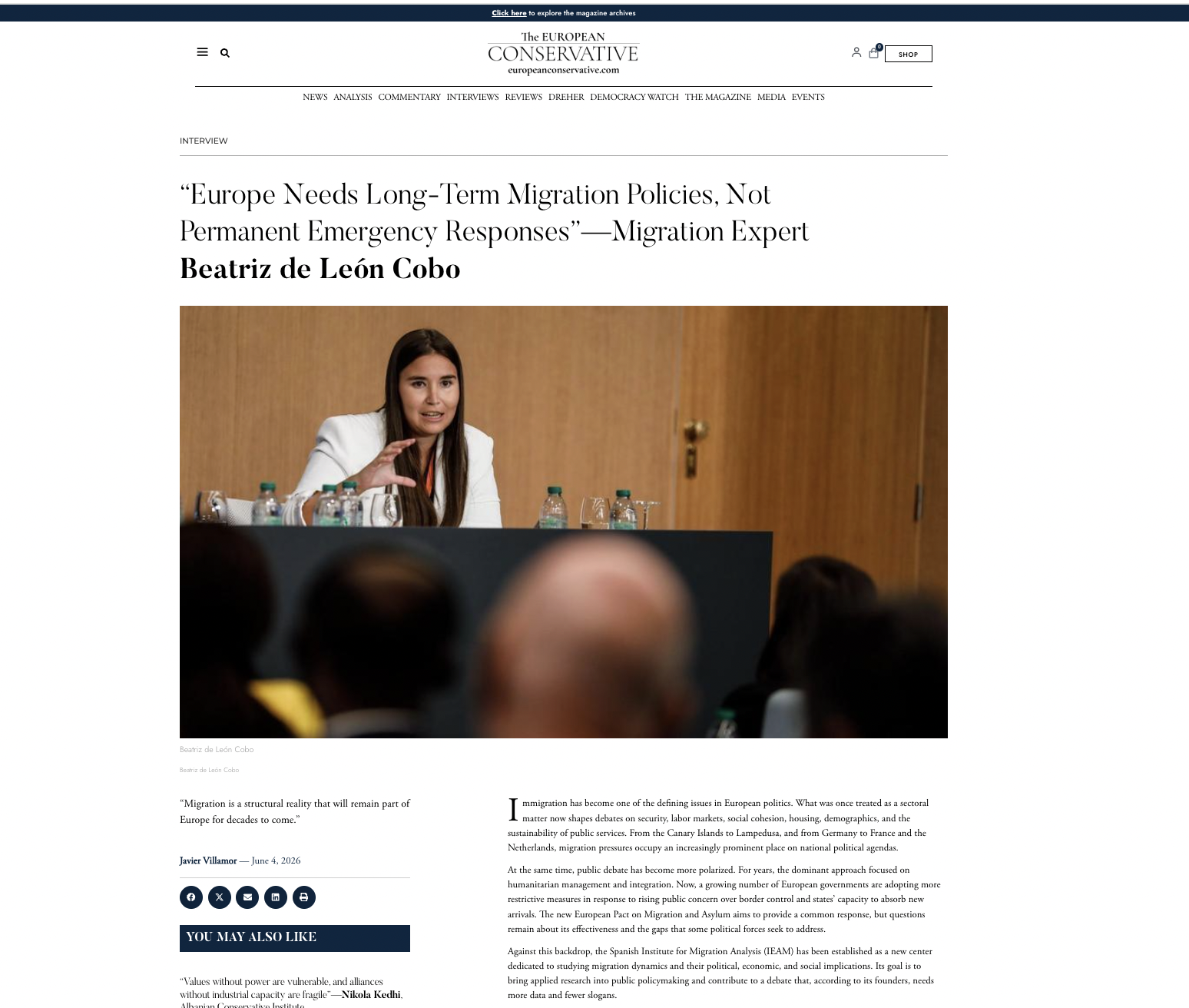
The European Conservative interviews Beatriz de León Cobo on migration, the Sahel, and European policy responses
IEAM's director discusses current migration challenges, the polarisation of public debate, and the need for more technical, precise, and long-term migration policies.
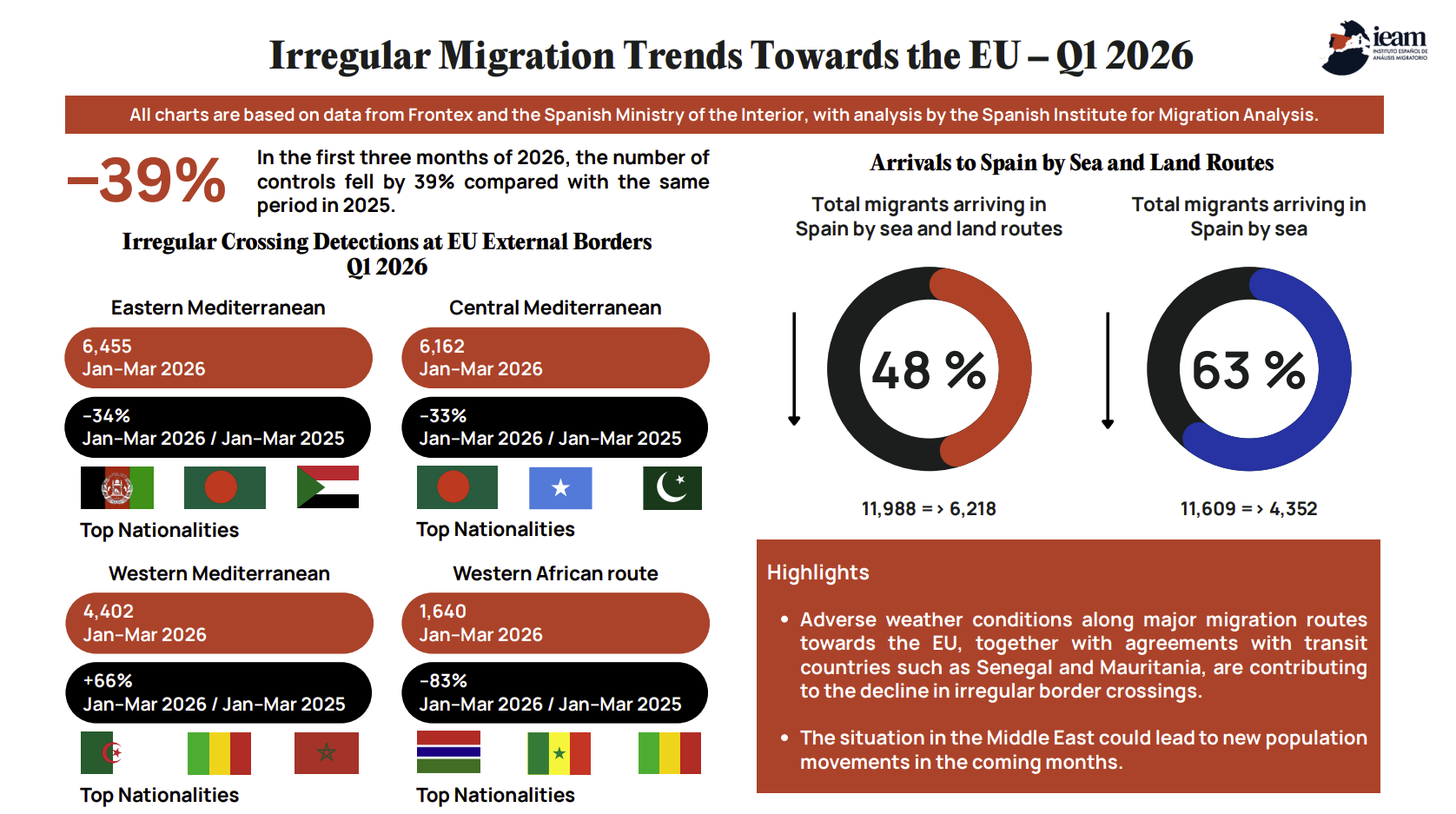
Irregular Migration Trends Towards the EU – Q1 2026
Analysis of the main trends in irregular migration towards the EU in the first quarter of 2026, based on data from Frontex and the Spanish Ministry of the Interior.
Credible legal pathways: Between political promise and actual capacity
Strategic guidelines to turn legal pathways into effective and sustainable mechanisms.
Get in touch with us
Do you have any questions or comments? We are here to help and collaborate on migration and public policy projects.