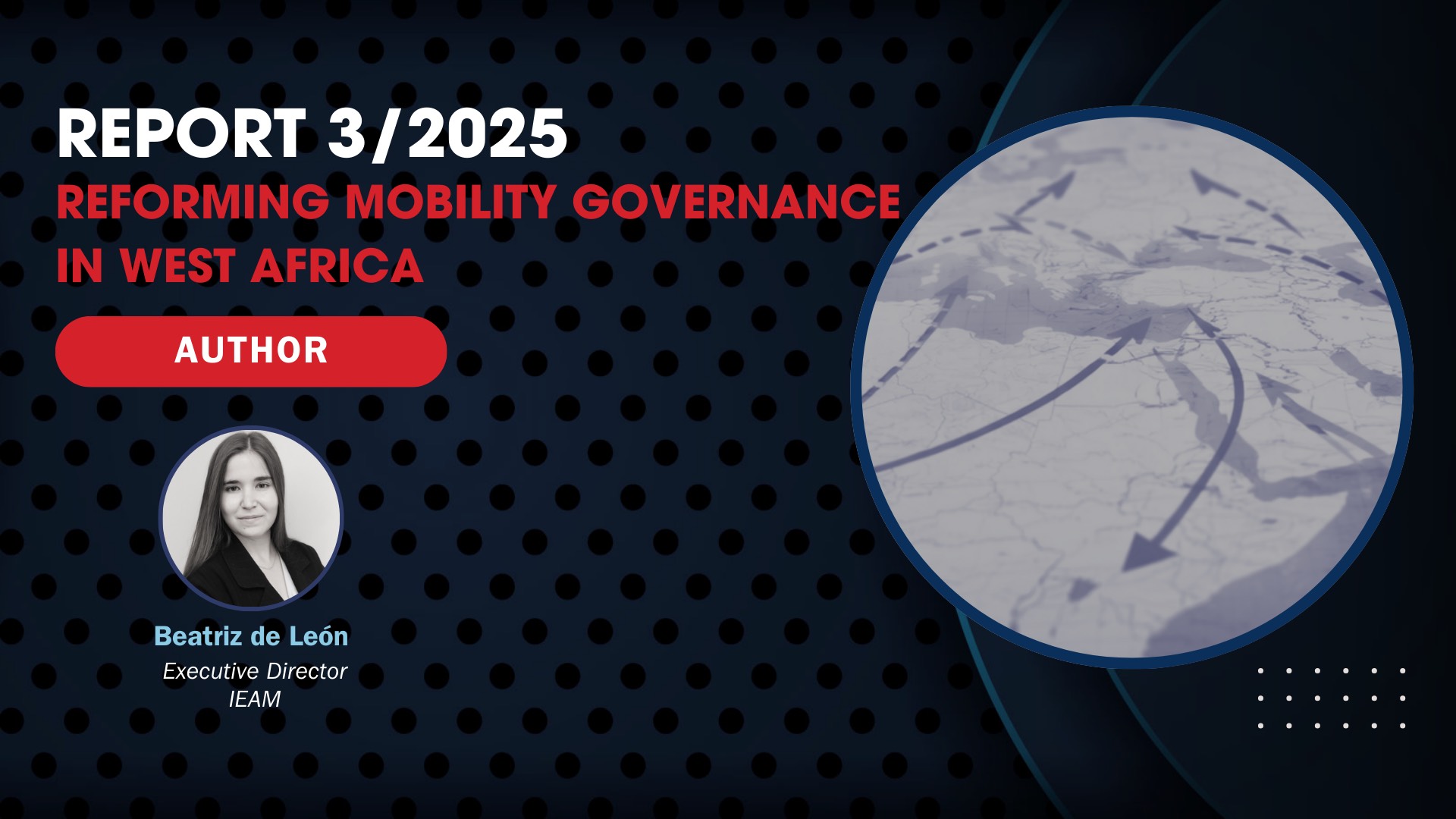
Reforming Mobility Governance in West Africa
A common action framework to integrate human dignity, economic realities, and protection needs.
EXECUTIVE SUMMARY
The objective of this policy paper is to propose a common framework for action to transform irregular migration into orderly mobility along the Senegal-Mali-Mauritania-Europe axis, integrating human dignity, economic realities, and protection needs into its approach. The document is part of a series of works by the Spanish Institute for Migration Analysis (IEAM) and is the result of a collective intelligence workshop held in Dakar, which brought together researchers, government representatives, international and humanitarian organizations, community actors, the private sector, and diasporas. The aim of the exercise was to consolidate a shared diagnosis, identify short-term vigilance points, and formulate recommendations and operational pilot projects.
The diagnosis takes place in a context of reactivation of the Atlantic route as a main access route to the EU, with a rebound in arrivals to the Canary Islands since 2023-2024 and a diversification of profiles (youth, women, children, new countries of origin). However, in 2025, the preeminence of departures from Algeria to Spain remains significant. In this recomposing landscape, mobility governance suffers less from a lack of texts than from a deficit of coherence in implementation, fragmenting bilateralism, and displacement effects that divert routes to other areas—sometimes more dangerous—without reducing the structural factors of departures.
STRATEGIC MESSAGES
- Sovereignty through regional coherence: establish pragmatic coordination focused on cross-border effects, in order to preserve good neighborliness, border economies, and local stability; focus primarily on criminal networks (and not on people) through reinforced judicial cooperation, and reduce extortion at checkpoints as a condition for effectiveness.
- The diaspora and community rooting as a bridge of trust: connect diaspora associations, municipalities, and community actors in areas of origin to disseminate reliable information, support mentoring and investment, reinforce local alternatives, and promote sustainable returns backed by the socio-economic environment.
- Anchor implementation at the territorial level: better articulate supply and demand through companies, municipalities, and decentralized services, to align profiles, positions, consular requirements, and viable pathways.
- Make regular mobility credible and accessible: reform consular practices (predictability, transparency, communication, reduction of deadlines) and reduce the space left to fraudulent intermediaries.
- Data for realistic decision-making and anticipating routes: institutionalize systematic triangulation and create a light monitoring mechanism with periodic reports shared among the countries of the region.
IEAM Team
Research
Keep exploring
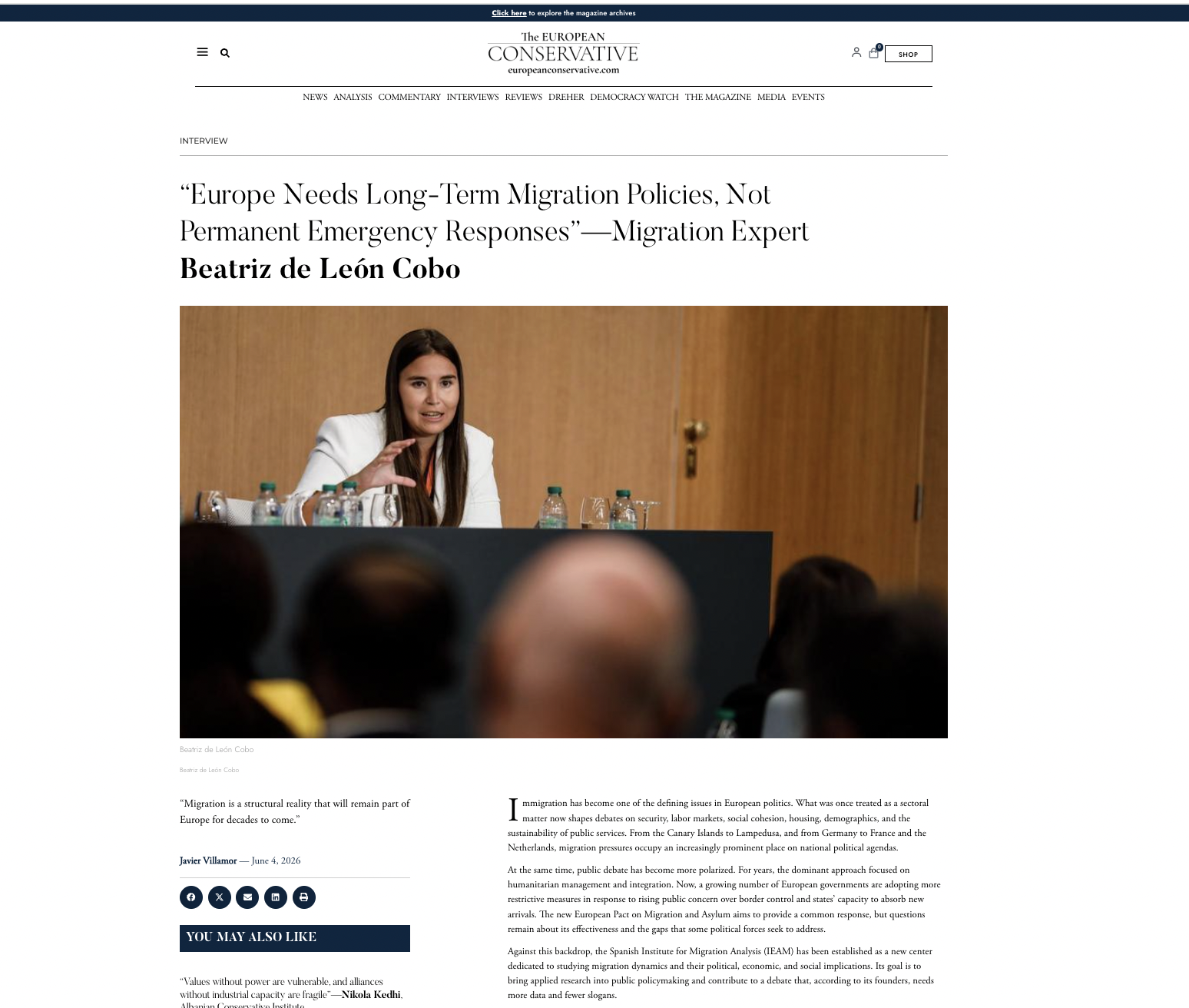
The European Conservative interviews Beatriz de León Cobo on migration, the Sahel, and European policy responses
IEAM's director discusses current migration challenges, the polarisation of public debate, and the need for more technical, precise, and long-term migration policies.
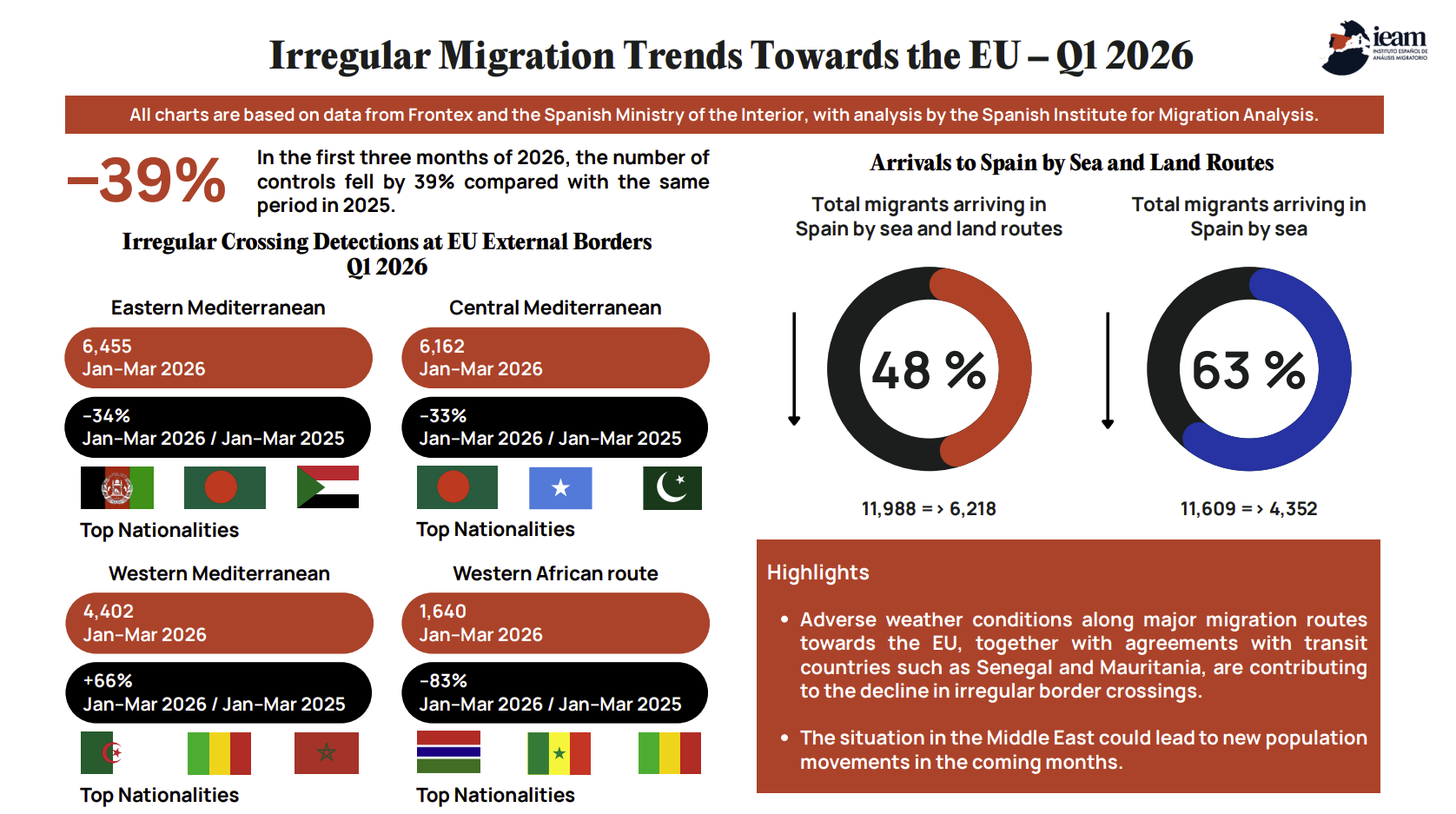
Irregular Migration Trends Towards the EU – Q1 2026
Analysis of the main trends in irregular migration towards the EU in the first quarter of 2026, based on data from Frontex and the Spanish Ministry of the Interior.
Credible legal pathways: Between political promise and actual capacity
Strategic guidelines to turn legal pathways into effective and sustainable mechanisms.
Get in touch with us
Do you have any questions or comments? We are here to help and collaborate on migration and public policy projects.